Surface preparation is one of the most crucial - and at the same time most variable - steps in the bonding process. Whether plasma or flame treatment, cleaning or abrasion: everything depends on using the right parameters.
Do you check the parameters of your pretreatment?
Brighton Science helps manufacturers make this variability measurable and bring it under control. This ensures that every pretreatment is performed reproducibly and reliable results are achieved.
Cleaning alone is not enough:
It is crucial to measure the effect of the processes used and link them directly to the subsequent adhesive strength.
This is where Brighton Science comes in:
Data-based analyses can be used to optimize, validate, and secure pretreatment and activation processes throughout the entire manufacturing process.
Typical applications:
- Optimize parameters for plasma or flame treatments
- Validating pretreatment on different materials
- Detecting under- or over-treatment prior to bonding
- Checking adhesive strength prior to production
- Identifying and eliminating the causes of adhesion problems
Strong adhesion starts with the right data!
Contact our team, Dr. Maximilian Krötz and Florian Deuser, to schedule a consultation!
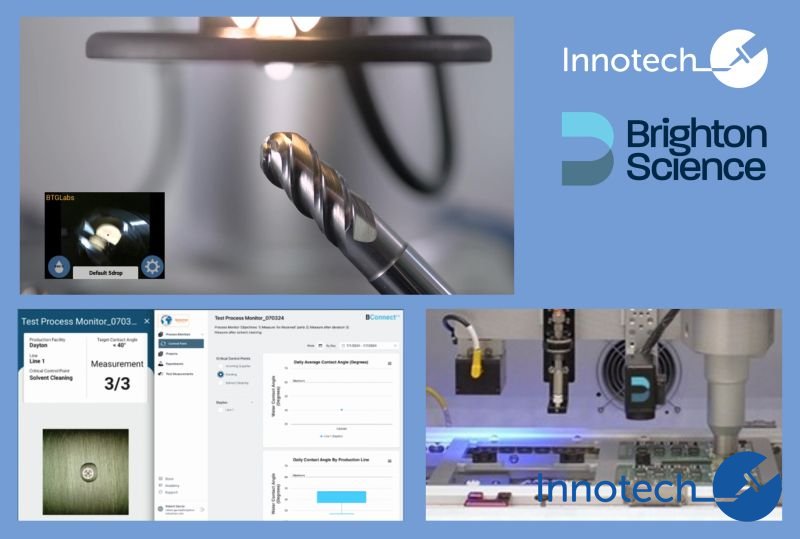
Without good surface preparation, even the best adhesive is not enough!
Frequently Asked Questions (FAQ)
Question: Why is surface preparation so important in bonding?
Answer: Surface preparation plays a crucial role in determining the strength of a bonded joint. If it is not done correctly, even the best adhesive cannot create a stable bond. Proper preparation ensures that materials adhere reliably to each other.
Question: Which surface treatment methods are used in the bonding process?
Answer: Common methods include plasma or flame treatment, cleaning, and abrasion. Each method has specific parameters that must be tailored to the material. Choosing and setting the right process is essential for achieving consistent results.
Question: Why is simple cleaning of the surface not enough?
Answer: Cleaning removes contaminants but does not guarantee optimal adhesion. It is important to control surface energy and activation levels. Only by measuring and monitoring these factors can the desired bond strength be achieved.
Question: How does Brighton Science help optimize surface preparation?
Answer: Brighton Science uses data-driven analysis to make surface treatment processes measurable and reproducible. This allows parameters to be optimized and validated effectively. The result is more stable processes and consistently high production quality.
Question: What are the benefits of data-driven control in surface preparation?
Answer: Data-driven control helps detect under- or over-treatment at an early stage. It also enables targeted analysis and resolution of adhesion issues. This improves production reliability and ensures consistently high-quality bonded joints.