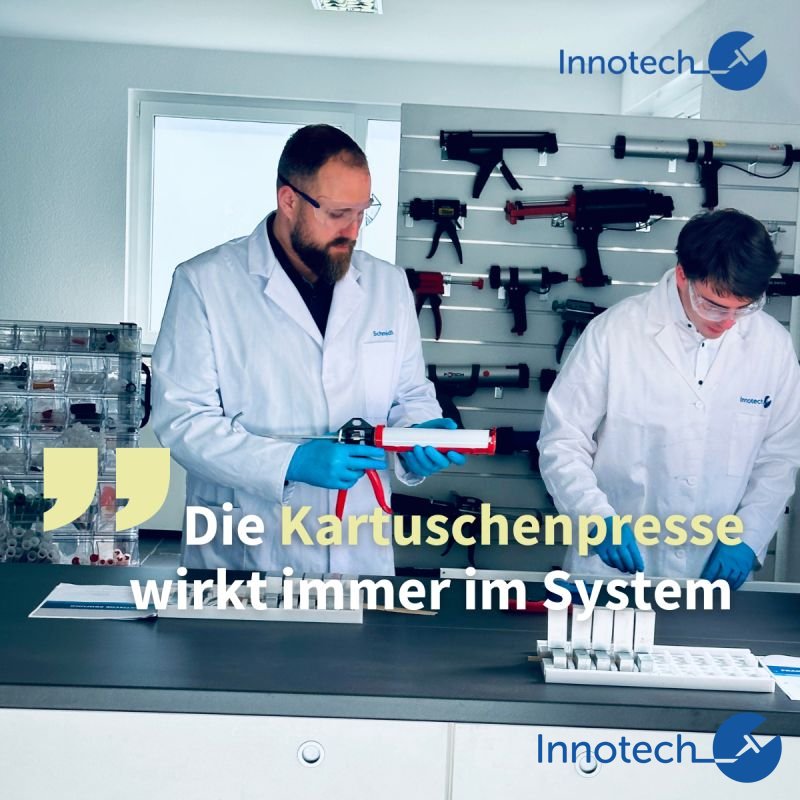
The cartridge press always operates as part of the system
Many focus only on the device.
Professionals consider the entire process.
Because in reality, everything is interconnected:
- Adhesive (viscosity)
- Nozzle & mixing technology
- Device
- User
- Environment
The cartridge press always operates within the system
TCB means:
Not choosing the best product – but the best overall solution.
Therefore, holistic solutions (material + device + training + service) are crucial.
Have you ever analyzed your process holistically?
Frequently Asked Questions (FAQ)
Question: Why is the cartridge press alone often not the actual problem in the bonding process?
Answer: In many applications, the issue is not the cartridge press itself but the entire system surrounding the bonding process. Factors such as adhesive viscosity, nozzle, mixing technology, user, and environment significantly influence the outcome. If these elements are not optimally coordinated, even a good device cannot deliver perfect results.
Question: Which factors influence the results when working with a cartridge press?
Answer: The outcome depends on several interconnected factors. These include the adhesive used and its viscosity, the correct nozzle and mixing technology, the quality of the device, and the experience of the user. The environment, such as temperature or working conditions, can also affect the bonding process.
Question: What does a systemic approach mean when using a cartridge press?
Answer: A systemic approach means considering the entire process rather than just a single product. For the cartridge press, this includes the combination of material, device, application technique, and working environment. Only when all components work optimally together does a reliable and reproducible solution emerge.
Question: What is meant by the TCB principle in connection with bonding technology?
Answer: TCB stands for the idea of not simply choosing the best individual product but the best overall solution. In bonding technology, this means considering material, device, training, and service together. This approach ensures more stable processes and reduces sources of error.
Question: Why is it worthwhile to analyze your bonding process holistically?
Answer: A holistic analysis helps identify weaknesses throughout the entire process. Often, problems are not with the device but with the combination of material, application, or environment. Considering all factors can improve quality, reduce costs, and achieve more stable results in the long term.